
Why does Rahul Gandhi repeatedly appear to attack India when he is actually trying to attack the BJP?”
Godesi · 15 Aug 2026, 9:38 am

Why does Rahul Gandhi repeatedly appear to attack India when he is actually trying to attack the BJP?”
The current controversy gives you a timely opening. On August 15, 2026, BJP leaders accused Sonia Gandhi and other Congress leaders of trying to interrupt the full rendition of Vande Mataram at the AICC headquarters; Congress denied that interpretation and said Sonia Gandhi was asking for a chair for Mallikarjun Kharge. Reports also say the full rendition ultimately took place.
Rahul Gandhi, India and the Politics of Negativity: When Opposition to BJP Starts Looking Like Opposition to India
By Anil Aggarwal | GodIsri.com
There is a question Rahul Gandhi and the Congress leadership need to ask themselves this Independence Day:
When you oppose the BJP, are you opposing a political party—or are you allowing your politics to make you appear opposed to India itself?
That distinction matters.
A politician has every right to criticize Narendra Modi, the BJP, government policies, economic decisions, foreign policy, defence policy or any other issue. In fact, strong opposition is essential to democracy.
But there is a line between opposing the government of India and appearing to oppose the nation of India.
And increasingly, many Indians are asking whether Rahul Gandhi understands that difference.
The Vande Mataram controversy
The latest controversy at the AICC headquarters on Independence Day has once again brought this question into the spotlight.
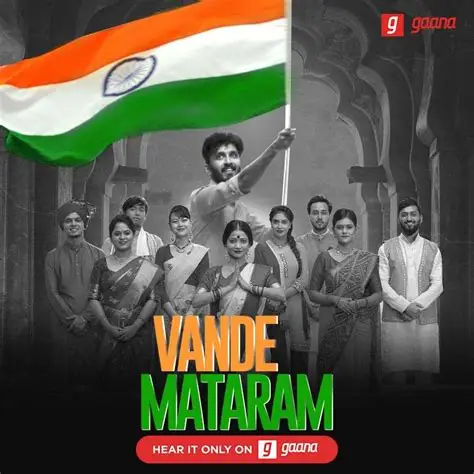
Videos from the Congress Independence Day programme triggered accusations from BJP leaders that Sonia Gandhi and other senior Congress leaders were attempting to interrupt or limit the rendition of the full Vande Mataram. Congress has rejected that interpretation, saying Sonia Gandhi was asking for a chair for Congress president Mallikarjun Kharge rather than trying to stop the song. The full rendition nevertheless took place. (The New Indian Express)
So let us be fair: a video gesture is not automatically proof of someone’s intention.
But politics is also about perception.
When a national song is being sung on Independence Day, the leadership of one of India’s oldest political parties should be extraordinarily careful about how its actions appear to millions of Indians watching.
Because Vande Mataram is not BJP’s property.
It is not Congress’s property.
It belongs to the nation.
And that is precisely where Rahul Gandhi and the Congress leadership need to understand the changing India.
Criticize Modi. Don’t diminish India.
If Rahul Gandhi believes Narendra Modi has failed, say so.
If he believes Make in India is unsuccessful, explain why.
If he believes India’s manufacturing strategy needs improvement, present an alternative.
If he believes India’s foreign policy is wrong, make the case.
If he believes India’s defence expenditure is excessive or insufficient, debate it.
That is politics.
But when criticism repeatedly crosses into language or imagery that can be interpreted as India itself being weak, incapable, backward or incapable of achieving anything, the political message becomes very different.
Rahul Gandhi is not an ordinary political commentator.
He is the Leader of the Opposition and one of the most prominent potential national leaders of the Congress party.
If he wants Indians to eventually trust him with the Prime Minister’s Office, he has to understand something fundamental:
You cannot constantly tell Indians that their country is failing and then expect those same Indians to believe you are the person who will make the country great.
India has changed
Perhaps the biggest problem is that the Congress ecosystem has not fully understood how dramatically India has changed.
Today’s Indian voter is not necessarily looking for someone simply to “come to power.”
The new Indian voter has access to information.
He or she can compare India with America, Europe, China, Japan, Singapore, the Middle East and the rest of the world.
They can see India’s highways.
They can see UPI.
They can see India’s space programme.
They can see India’s growing defence manufacturing.
They can see Indian companies operating globally.
They can see Indian engineers, doctors, entrepreneurs and professionals succeeding around the world.
They can see India becoming an increasingly important manufacturing and technology destination.
And perhaps most importantly, they have developed pride in being Indian.
You may disagree with the BJP.
You may disagree with Modi.
You may disagree with Hindutva.
You may disagree with almost everything the government does.
But that does not require you to be negative about India.
In fact, the strongest opposition party should be saying:
“India is great—and we can make India even greater.”
The defence story is an example
Look at India’s defence sector.
India was once heavily dependent on imports for major defence requirements. Today, India is increasingly talking about indigenous production, defence exports and becoming a global defence manufacturing hub.
The transformation did not happen overnight, and there are legitimate questions about targets, procurement, quality, employment and competitiveness.
Those are fair political arguments.
But imagine the difference between saying:
“India cannot manufacture anything.”
and saying:
“India has started manufacturing more, but we believe the government should do even more.”
One message attacks confidence.
The other builds confidence while challenging the government.
That is the difference between negative politics and constructive opposition.
The “coffee” analogy
I think there is a simple way to understand what today’s voter is looking for.
Imagine two politicians.
One gives you a cup of coffee.
The other gives you a coffee machine.
The first gives you something today.
The second teaches you how to make coffee tomorrow.
Indian voters increasingly want the coffee machine.
They want education.
They want opportunity.
They want infrastructure.
They want technology.
They want businesses.
They want jobs.
They want security.
They want India to have a stronger voice internationally.
They want to know that their children will have more opportunities than they did.
Political parties can give temporary benefits, but the politics of the future will increasingly belong to whoever can give people the ability to create their own future.
Congress needs to wake up
The Congress party does not need to disappear.
India needs a strong opposition.
A democracy without a credible opposition becomes unhealthy.
But Congress needs to reinvent itself.
And Rahul Gandhi, more than anyone else, needs to decide what kind of national leader he wants to be.
Does he want to be the politician whose entire identity is built around defeating Narendra Modi?
Or does he want to be the politician who tells India:
“I disagree with Modi, but I believe in India.”
That second Rahul Gandhi would be much more difficult to defeat.
Because Indians can understand political disagreement.
They can understand anger.
They can understand criticism.
But they also want their leaders to demonstrate faith in the country.
Don’t confuse India with the government
This is perhaps the most important lesson.
Modi is not India.
BJP is not India.
Congress is not India.
Rahul Gandhi is not India.
No political party owns India.
India belongs to 1.4 billion-plus Indians.
Therefore, criticizing the government is perfectly legitimate.
But a national politician must be careful never to make his political campaign sound like a campaign against the country itself.
Because eventually the voter may ask:
“If you don’t believe in the India you are describing, why should I trust you to lead it?”
Rahul Gandhi should travel beyond the political bubble
My advice to Rahul Gandhi is simple:
Get out of the political bubble.
Talk to ordinary Indians.
Talk to the factory worker.
Talk to the small businessman.
Talk to the farmer.
Talk to the young software engineer.
Talk to the soldier’s family.
Talk to the entrepreneur building a company from a small town.
Talk to Indians living abroad.
Talk to young Indians who have never experienced the India their parents grew up in.
And perhaps most importantly, listen without your political advisers standing between you and the people.
Maybe do it anonymously.
Maybe walk through a market.
Maybe visit a factory without cameras.
Maybe sit with young entrepreneurs.
Ask them one question:
“What do you want India to become?”
I suspect the answers would surprise many politicians.
India doesn’t need politicians who hate each other
India needs politicians who compete to love India more.
That should be the new standard.
The BJP should be challenged.
Congress should be challenged.
Every political party should be challenged.
But the competition should be:
Who can make India stronger?
Who can create more jobs?
Who can educate more children?
Who can build better infrastructure?
Who can make Indian manufacturing globally competitive?
Who can make Indian defence technology stronger?
Who can make India’s cities better?
Who can make India safer?
Who can make Indian businesses more successful?
Who can make the Indian passport more powerful?
Who can make the next generation proud to call themselves Indian?
That is the political competition India deserves.
The warning for Congress
The Congress party should not assume that whatever worked with previous generations will work with today’s India.
The voter is changing.
The aspirations are changing.
The information environment is changing.
India’s place in the world is changing.
And nationalism is no longer simply a political slogan. For millions of young Indians, it is increasingly connected to confidence, opportunity, technology, defence, entrepreneurship and global recognition.
If Congress continues to allow Rahul Gandhi’s political messaging to be interpreted as relentlessly negative toward India, it risks creating a political problem far bigger than losing an election.
It risks losing emotional connection with the Indian voter.
And once a political party loses that emotional connection, rebuilding it can take generations.
A final message to Rahul Gandhi
Rahul Gandhi, criticize Modi.
Criticize BJP.
Challenge every government decision you believe is wrong.
Fight elections aggressively.
Hold the government accountable.
That is your constitutional role.
But please understand the difference between India and the government of India.
When Vande Mataram is being sung, remember that it is not a BJP song.
When Indian soldiers defend the country, they are not defending a political party.
When an Indian entrepreneur exports products, he is not exporting BJP ideology.
When an Indian scientist launches a satellite, she is not launching a Congress or BJP satellite.
They are all contributing to India.
So fight the BJP if you must.
But don’t fight India while doing it.
Because today’s Indian voter does not merely want a politician who can tell them what is wrong.
They want a leader who can show them what is possible.
And perhaps that is the biggest lesson Rahul Gandhi—and the Congress party—need to learn this Independence Day.
India is no longer waiting for someone to give it confidence.
India is already becoming confident.
The question is whether its political leadership will rise to meet that confidence—or continue trying to pull the country back into yesterday’s politics.
- Where the reporter saw it
- Reporter’s declaration
- Witnessed or verified personally · media unedited · location and time accurate · not AI-generated
Does this match what you know?
Godesi does not witness these reports — the community checks them.
Godesi is not the publisher of member reports and does not witness them. Read our terms. Something wrong? Tell the news desk.
More desi news
📣 Seen something in your city?
Godesi runs on what the community reports — a temple event, a new shop, a scam warning, a school win. Post it and your story appears on Godesi and across the desi network.